During this
week, the subject that called my attention was about synaptic pruning and brain
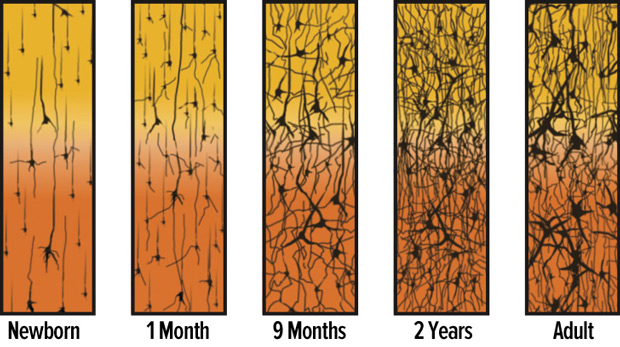
plasticity in chapter 3. I’ve found some good picture that summarizes the idea:


According
to studies, there is a fast increase in synapse density up to 2 years, and from
that point on, synaptic pruning (decrease of synapses) takes place until adolescence.
However, according to the graph above, not all synapses follow the same pattern
of growth or pruning.
It seems
that our capabilities and skills are set until early adolescence. If that is
so, why we are able to learn different things throughout life that were not
presented to us in early development? The only possible conclusion to me was brain plasticity.
It seems that although our synapses are
pretty much the same through adulthood how they respond to stimulus might
change. Also, microglia (specific cell type in the brain that work in the
immune response as well repair) seems to play an important role in brain
modulation.
I would
like to know more about it, whether microglia helps in neurogenesis in
adulthood or if that reactivates paths that were cut during synapse pruning.
I remember
as a child I was not much into physical activities. Sports and things that would require physical effort were not easy to me. When I start working I would spend most of
my time in front of the computer. I've worked with IT for over 10 years.
However, in
the last 3 years my husband, who is very athletic and great at sports,
introduced me to a number of outdoor activities and workouts. It turned out that I’m
actually good at that. It was like I always had it in me but it was hidden. I’m wondering if this is because I already had the pathways for that or
if this is just a modulation of my brain to the new situation.


That's a good question. In the book it says that that synapses that are active are preserved but the inactive ones are eliminated. I would love to know examples of the inactive synapses that might be eliminated and how specific the activity would have to be. If this pruning is taking place around the first birthday, with the regions for sensory and motor function being completed first, the basic motor functions for something like ice hockey or tennis must be there. My husband picked up hockey at the age of 25 and he definitely didn't play before the age of 1 :) Perhaps the development of movement as an infant in general is enough to keep those synapses available to learn future skills.
ReplyDelete